
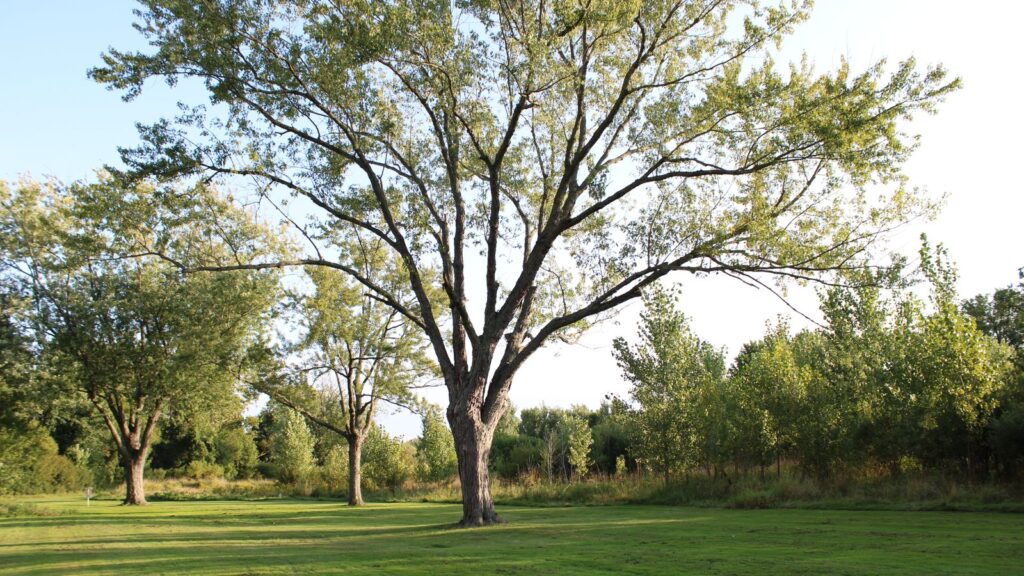
Picture a normal Tuesday in that yard. Not the summer evening with the sun going down and the listing photos looking perfect. A Tuesday. It’s humid, you got home late, the grass is six inches high, and somebody still has to eat dinner.
That’s the test. Most people buying an acreage east of Lincoln fall in love with the open space and never think about the Tuesday version of it. Then they close, and the yard owns them instead of the other way around.
You can avoid that. It just takes a slower walk through the property before you write an offer.
Walk the yard like you already live there
At a showing, almost everyone walks the house and glances at the yard. Flip it. Give the outside real time.
Start at the mailbox and walk the whole perimeter. Notice where the ground dips. Notice what’s going to be a pain to mow around. Notice how far it is from the back door to wherever you’d keep a mower.
This is the part I do with buyers out in Bennet, Palmyra, Elmwood, and Weeping Water all the time. The house is usually straightforward. The land is where the surprises live.
Mowing is the question under all the other questions
Open space looks peaceful until you’re the one cutting it. So be specific:
- How much of it is actually mowed? Some acreages keep a tidy yard and let the rest go to pasture or native grass. Others mow the whole thing. Those are two very different lives.
- How many obstacles are there? Trees, fence posts, culverts, septic lids, flower beds, a swing set, a fire pit ring. Every one of them is a turn. Turns are what make mowing take forever.
- Is it flat? Slopes, ditches, and creek banks change what equipment you need.
- What are they mowing it with now? Ask. Sellers will tell you. If they’re using a zero turn and a trim mower and still spending their Saturday on it, that’s useful information.
You’re not looking for a number. You’re looking for an honest picture of the work.
Shade is worth more than people think
Mature trees change everything about how a yard feels in July. They also change the work. Shade means less watering and a cooler place to sit. It also means leaves in the fall, limbs after a storm, and eventually a tree that has to come down.
No shade at all is its own problem. A brand new build on a bare lot is a blank slate, which is great if planting trees sounds like a fun project and rough if it sounds like a chore. Look up when you’re out there. Ask yourself where you’d actually want to stand on a hot afternoon.
Landscaping beds are a commitment, not a feature
Some of the prettiest yards I’ve shown in Syracuse and Louisville were pretty because somebody worked on them for years. Beds, borders, perennials, mulch rings, a vegetable garden.
If that’s your thing, that’s a gift. If it isn’t, be honest with yourself now. Beds that go unweeded for one season look rough. Two seasons and you’re starting over.
There’s no wrong answer. Just know which person you are before you buy a yard built for the other one.
Where does the stuff go
Acreage living comes with equipment. A mower, a trimmer, hoses, fuel, a snow blower, ladders, tools, maybe a trailer.
So look hard at storage. Is there a shed? An outbuilding? A garage with room left over after the vehicles? Can you get a mower in and out without moving three other things first?
A yard with no place to keep the tools becomes a yard you dread. That’s a small detail that turns into a daily annoyance.
Decide how much time you actually want outside
Here’s the question I ask buyers: on a good weekend, how much of it do you want to spend taking care of this place?
Some people love it. The mowing, the burn pile, the garden, the projects. That’s the whole reason they’re leaving Lincoln. Others want the view, the quiet, and the space between neighbors, and not much else.
Both are completely fine. But they point to different properties. One wants more ground. One wants a manageable yard with good shade and a shed that’s already in the right spot.
Ask the seller the boring questions
Before you’re under contract, ask about the well and the septic, where the water lines run, whether the yard holds water after a hard rain, what gets flooded or icy, and what they’d change if they were staying.
Most sellers in these small towns will tell you straight. They’ve lived it.
We don’t have to force it. There will be another one if it’s not right, and the right yard is the one you won’t resent in August.
If you’re thinking about moving out this way and you want to talk through what kind of property actually fits how you live, reach out and start a conversation. No commitment, just a plan. Love where you live.
If you’re juggling a sell and a buy at the same time, or eyeing a move to the small towns east of Lincoln, this is exactly what I do all day: See how I work →