
A radon result is only useful when you know two things: how the test was run, and what happens next. The number by itself doesn’t tell you much.
I get a version of this call almost every time a radon test comes back in Cass, Otoe, or Lancaster County. Somebody reads a number on a report, panics, and starts talking about walking away from a house they loved three days earlier. Slow down. Let’s go through what that report actually says.
Why radon comes up on almost every Nebraska deal
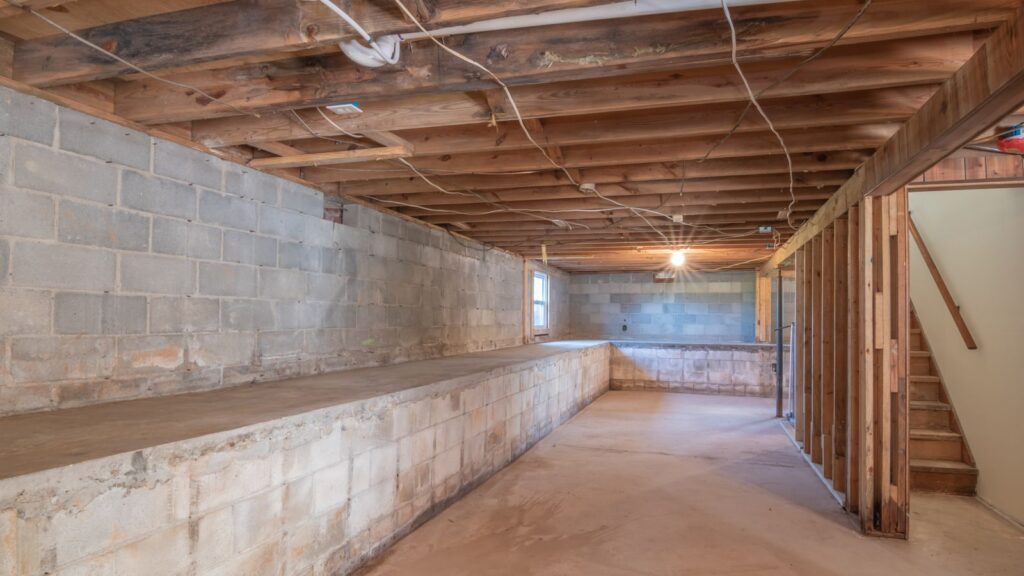
Radon is a naturally occurring gas that forms as uranium breaks down in soil and rock. You can’t see it or smell it. It moves up through the ground and gets into houses through foundation cracks, sump pits, crawl space floors, and open block walls. The EPA considers long-term exposure a lung cancer risk, which is why it shows up in the inspection conversation at all.
Nebraska is a high radon state. Our soils and our basements are a combination that produces elevated readings a lot of the time. That is true in Lincoln and it is true out in Unadilla, Palmyra, Syracuse, Weeping Water, Louisville, Murdock, Elmwood, and Bennet. An elevated result here is common. It is not a sign that somebody built the house wrong.
How the test was done changes what the number means
Most radon tests during a purchase are short-term tests, usually 48 hours. For the result to mean anything, the conditions have to be right:
- Closed-house conditions. Windows and exterior doors stay shut for at least 12 hours before the test and the whole way through, except for normal in-and-out.
- The right room. Lowest livable level. Not the kitchen, bathroom, or laundry room.
- The right placement. Off the floor, away from exterior walls, drafts, sump lids, and HVAC vents.
- The right tester. Nebraska credentials radon measurement and mitigation professionals through the state health department. Ask to see it. Any legitimate tester will hand it over without blinking.
Weather matters too. Cold months, wind, and heavy rain all push readings around. So does a vacant house with the HVAC off. If a seller had the windows open for a showing during the test window, that result is garbage and you should retest, not negotiate off of it.
A short-term test is a snapshot of two days in that basement. Useful. Not the whole story.
What comes next if the number is elevated
EPA guidance is to fix at 4 pCi/L or higher, and to consider fixing between 2 and 4. Fixing it means a mitigation system: a sealed pipe pulling air from under the slab and venting it above the roofline, with a fan running continuously. It is a retrofit that goes on most houses in a day or two. On newer construction you sometimes find a passive stub pipe already in place that can be activated.
Here is the part people miss. Once you’re under contract, you have a window to deal with this, and the move is to get a real written quote from a licensed mitigator rather than guessing. A guess becomes an argument. A quote becomes a negotiation. From there your options usually look like: seller installs a system with a post-mitigation retest, seller gives a credit and you handle it, or you accept it as-is because you’ve decided it’s not worth the trade.
On acreages and rural properties, I’ll usually have us look at the crawl space and the sump setup while we’re at it, because how the house sits on the ground affects how a system gets designed. Well water testing is a separate item. Don’t assume one covers the other.
A result is a condition, not a verdict
I won’t tell you a house is safe or unsafe. That’s not my call and it isn’t an agent’s job. What I will tell you is that radon is one of the more fixable things that shows up on an inspection report. Roofs, foundations, and old sewer lines are harder conversations.
I had buyers leaving a Lincoln starter home for a small town east of here. Their radon number came back high and they were ready to be done with the whole house. We didn’t panic. We got a quote, took it back to the seller, and worked it into the deal with a retest after install. They closed, they knew exactly what they were getting, and they didn’t overpay for the privilege.
If you’re selling and buying at the same time, know that you may be on both sides of this conversation within the same month. That’s worth planning for before either house hits the market.
If you want to talk through where you’re at, reach out. No paperwork, no commitment, just a conversation about your situation so we can build a plan that fits it. It takes as long as it takes, and if you don’t give up on me, I won’t give up on you.
If you’re juggling a sell and a buy at the same time, or eyeing a move to the small towns east of Lincoln, this is exactly what I do all day: See how I work →