
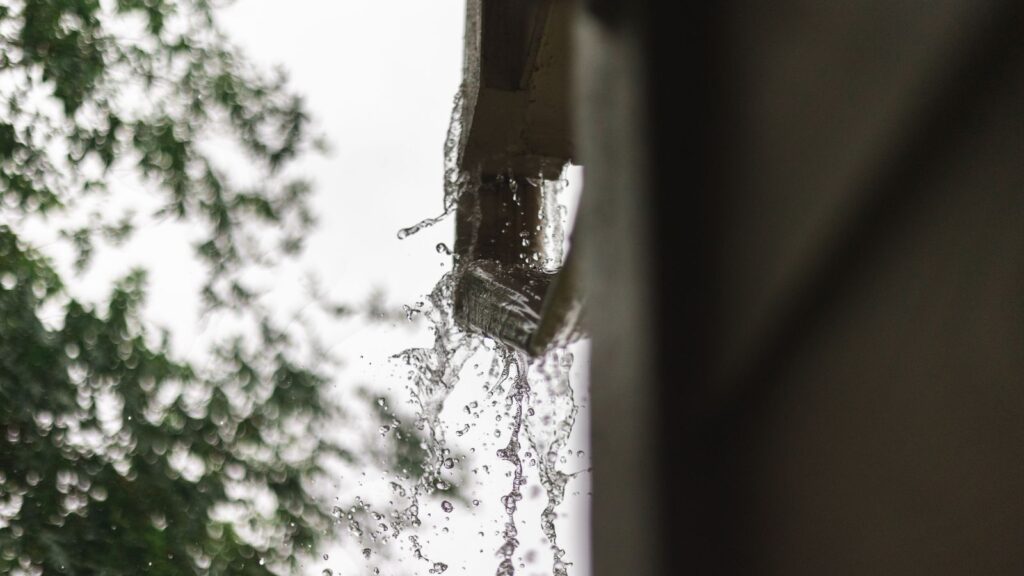
A showing in the rain is worth more than a showing on a perfect day. Sunshine hides things. Water doesn’t.
Most buyers try to reschedule when the forecast turns. I usually tell them the opposite. If it’s pouring and you have a chance to walk a house in Palmyra or Elmwood or Bennet, go. You’ll learn things in twenty minutes that you’d otherwise find out after closing.
Start before you get out of the car
Out here, a lot of what matters happens before the front door. Gravel roads, longer driveways, acreage lots that sit off the county road.
So look at the drive. Is it holding water or shedding it? Are there ruts and washouts, or does it look like it drains where it’s supposed to? On an acreage, ask yourself whether you’d want to back a truck or a trailer down that in February slush. Rain tells you where the low spots are. Snow melt tells you the same thing, just slower.
Then look at the road itself. Some gravel roads hold up great in weather. Some turn soft. Your commute back to Lincoln on Highway 2 or Highway 50 is easy enough. The last mile is the part people forget to test.
Watch the entrances
Walk up to every door, not just the one the agent unlocks.
Where does the water go when it comes off the roof? Is there a gutter, and is it actually moving water away from the house, or dumping it against the foundation? Is the ground sloped away from the house or back toward it? Is the sidewalk or stoop pooling?
Stand in the doorway and look at the threshold. Wet weather shows you drafts, gaps, and doors that swell and stick. A back door you have to shoulder into is a small thing. It’s also information.
Look at where water collects, not just where it’s wet
Everything is wet in the rain. That’s not the signal. The signal is where water gathers and stays.
- Standing water in the yard, especially near the house
- Downspouts that end right at the foundation with no extension
- Window wells holding water
- Outbuildings, sheds, or a detached garage sitting lower than the house
- Culverts and ditches at the road, and whether they look maintained
Note it. Photograph it. Don’t diagnose it. You are not there to decide whether something is a foundation issue or a grading issue or a gutter that needs ten minutes of work. That’s what a licensed inspector is for, and on rural properties you may want a septic inspection and a well test on top of the general one.
Your job on a rainy showing is to collect good questions.
Gray light is honest light
Here’s the part nobody expects. Overcast days are the best light test you’ll get.
Every house looks bright at 2pm in June with the sun blasting through the west windows. Walk that same house under gray skies and you find out what it actually feels like. Which rooms need a lamp on at noon. Whether the basement is usable space or storage. How the kitchen reads when the only light is what the windows give you.
That matters more than people think. You’re going to live there through Nebraska Januarys, not just Nebraska Julys. If a house feels heavy on a gray Saturday, it will feel heavy in December.
Use your nose, too. Damp weather brings out smells that a dry week covers up. Again, not a diagnosis. Just a question for the inspector.
Why this matters more when you’re selling and buying at once
If you’re leaving a starter home in Lincoln to get more room in a small town, your timeline is already tight. You don’t have the luxury of touring a place three times across three seasons.
So make the showings you get count. A rainy tour front-loads the ugly information, which means you find the real issues while you still have leverage instead of after you’ve committed both sides of your move.
I had buyers who walked a small-town house they genuinely wanted. It needed work. The roof was the sticking point, and the sellers said no more than once. We stayed patient, made an offer that matched the condition, and kept going back. The roof got negotiated in. Meanwhile we had their Lincoln house prepped, listed, and under contract so the whole thing could actually line up. It worked because we knew what was wrong early.
What to do with what you find
Bring it all back and sort it into three piles. Cosmetic. Maintenance. Needs a professional opinion before we go further.
Most of what you see in the rain lands in the first two piles. That’s fine. A house with a downspout problem is not a bad house. A house you fell for on a sunny day and never saw wet is just a house you don’t know yet.
And if it turns out to be more than you want to take on, we don’t have to force it. There will be another one if it’s not right. Love where you live.
Tour the house in bad weather. It will tell you the truth.
If you’re juggling a sell and a buy at the same time, or eyeing a move to the small towns east of Lincoln, this is exactly what I do all day: See how I work →