
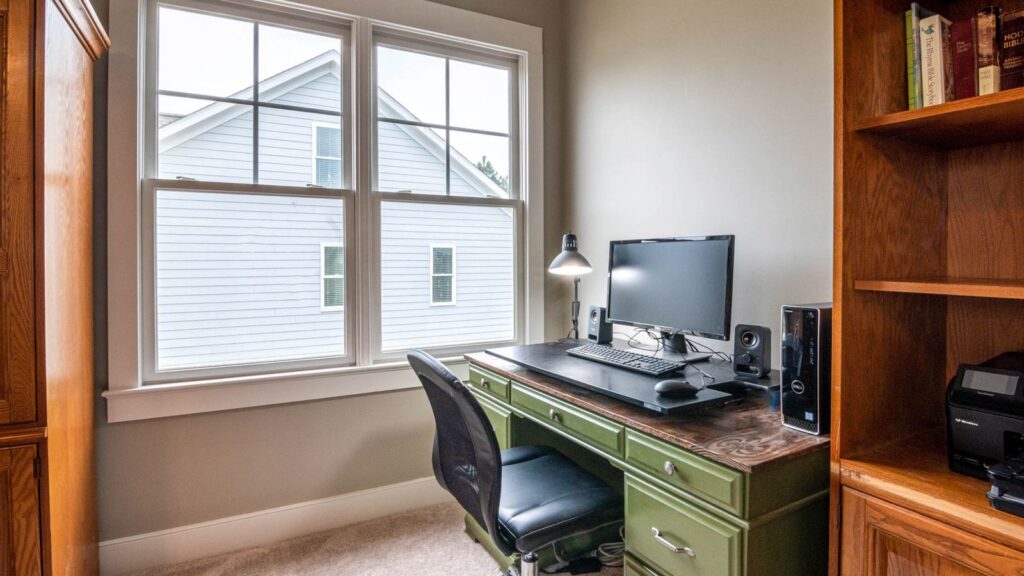
The quiet is great. The connection still has to work.
That is the whole thing in two sentences. People move out to Bennet, Palmyra, Syracuse, Unadilla, Weeping Water, Louisville, Murdock, or Elmwood because they want space, a slower pace, and a town where the grocery run takes four minutes. Then Monday morning shows up and there is a video call, a VPN, and a manager who does not care that you live on gravel now.
Both of those things can be true at the same time. You just have to check the second one before you write an offer, not after you get the keys.
Service is an address question, not a town question
This is the mistake I see most. Someone looks up a town, sees that a provider “serves” it, and assumes they are covered. Towns are not uniform. What is available three blocks over, or a half mile out on an acreage, can be a completely different situation than what is available at the house you are looking at.
So do not ask about the town. Ask about the address. Call the providers directly, give them the full property address, and ask them to confirm what they can actually deliver there and what it would take to get it hooked up. Ask the current owner what they use and how it has worked for them. If there is a home office in the listing photos, someone has already solved this problem, and they can tell you how.
Never take my word for it either. I know these towns well, but I am not going to invent a speed or a coverage map for you. Get it from the provider, in writing if you can.
Questions worth asking before you commit
- Is service available at this exact address right now, or is it “coming to the area”?
- What does installation involve? Is there existing equipment at the house, or does something need to be run or mounted?
- How long from order to install? This matters a lot if you have a hard start date on the other side of your move.
- What are the terms? Contract length, data limits, equipment, anything that changes how you actually use it day to day.
- What happens when it goes out? Ask how support works and how long repairs typically take out there.
Test the house while you are standing in it
You get a showing. Use it. Walk to the room you would actually work in, usually a spare bedroom, a basement corner, or an outbuilding someone finished off, and check your phone right there. Bars in the driveway are not the same as bars in the basement. Try a call. Load something. Notice where it drops.
Check the room itself while you are at it. Where are the outlets. Is there a window that is going to put the sun straight into your camera every afternoon. Is the door to that room across the house from everything loud, or right next to it. A home office that works is a room decision as much as it is a service decision.
And if you are buying an acreage, walk the outbuildings. People get big ideas about a shop office. Sometimes that works beautifully. Sometimes the signal stops at the house.
Have a backup before you need one
Everybody loses service eventually, in a small town or in the middle of Lincoln. The difference is whether you have a plan or you are scrambling at 8:45 on a Tuesday.
Figure out your fallback ahead of time. That might be your phone as a hotspot, if you have confirmed the coverage actually holds at the house. It might be a second connection. It might be the library, a coffee shop a town over, or a friend’s kitchen table. None of that is glamorous. All of it beats explaining to your boss that you cannot log in.
This gets tighter when you are selling too
A lot of my clients are leaving a Lincoln starter home to get out here. That means two sides moving at once, and now a third thing: your job has to keep running through all of it. So we build the connectivity check into the timeline the same way we build in inspections and contingencies. Confirm service early. Get the install scheduled before closing if you can. Know where you are working during the gap between houses, because there is usually a gap.
That is not pessimism. That is just a plan. Nobody has ever regretted knowing.
Do the homework, then enjoy the quiet
I am not trying to talk you out of a small town. I live this life. It is worth it. I just want you walking in with real information instead of hope, because a house you love with a connection you cannot work from is a problem you will feel every single weekday.
Check the address. Test the room. Line up a backup. If it does not check out, we keep looking. We don’t have to force it – there will be another one if it’s not right. Love where you live.
If you are thinking about a move out this direction and your job comes with you, reach out and let’s talk it through. No commitment, no paperwork, just a plan that fits your actual situation.
If you’re juggling a sell and a buy at the same time, or eyeing a move to the small towns east of Lincoln, this is exactly what I do all day: See how I work →