
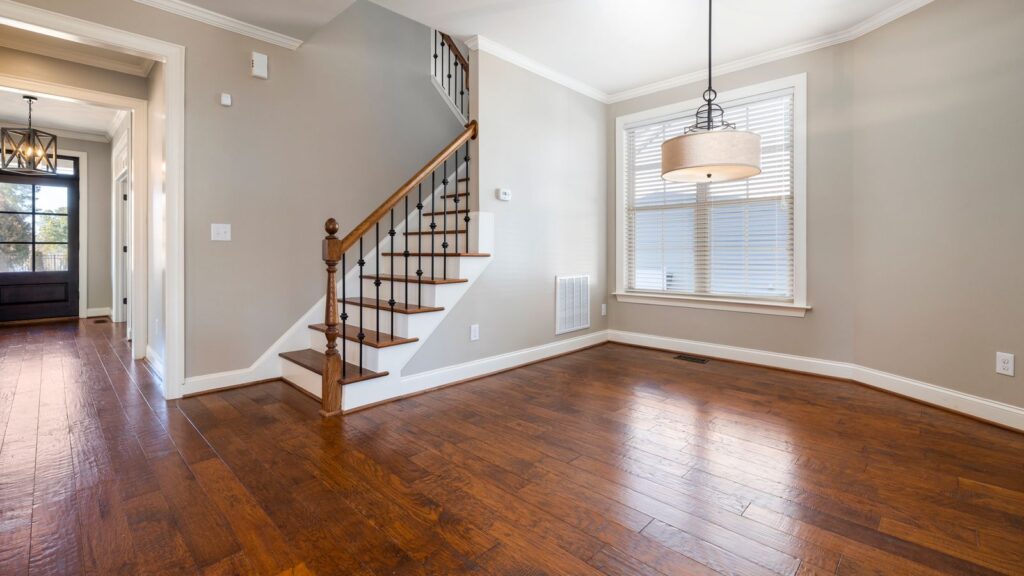
The first showing is emotional. The second one shouldn’t be.
That first walk-through is for your gut. You either feel something or you don’t. You notice the kitchen, the yard, the front porch, the way the light hits the living room. That’s fine. That’s what a first showing is for.
The second showing has a different job. It’s where you stop shopping and start testing. You already know you like it. Now you need to know if you can live in it, on a Tuesday in February, with groceries in your arms and a load of laundry going.
Here’s how I walk a second showing with buyers in Syracuse, Unadilla, Palmyra, Weeping Water, Louisville, Murdock, Elmwood, and Bennet. No pressure, no rushing. Just questions the first visit never answered.
Go back at a different time of day
If you saw it at 10 a.m. on a Saturday, go back on a weekday evening. Light changes. Traffic changes. Sound changes. A house that felt bright at noon can feel like a cave at 6 p.m. in November, and you deserve to know that before you’re the one paying for lamps.
Stand in the main living space and the primary bedroom and just look at where the windows face. Morning sun and afternoon sun are two completely different experiences.
The entry test
Walk in the door you’ll actually use every day. For most people out here, that’s not the front door. It’s the side door, the garage door, the back door off the drive.
Then ask: where do the boots go? The coats? The bags? Is there a spot, or are you going to be dropping everything on a kitchen counter for the next ten years? Plenty of older small-town homes have a great front entry and almost nothing at the working door. That’s not a dealbreaker. It’s just something to see now instead of on move-in day.
Walk the laundry route
This one gets skipped constantly. Start at the bedrooms. Carry an imaginary basket to the washer. Count the stairs. Count the doorways. Notice whether the laundry is in a finished space or a corner of a basement with a low ceiling and a light bulb on a string.
Then walk it back. If that route annoys you on a slow Sunday when you’re just imagining it, it will annoy you every week for as long as you own the house.
Count the storage honestly
Open every closet. Open the pantry. Look at the basement or the crawl space. Look at what’s already in the garage and ask yourself whether your stuff plus their stuff would fit, because right now you’re only seeing their version of it.
On acreages and rural properties, storage is a bigger conversation. Outbuildings, sheds, and shop space change how a place functions. A modest house with real outbuilding space can work better for some people than a larger house with none. Look at what’s actually there, not what could be built later.
Listen
Stand outside for two full minutes and say nothing. Then do it again in the backyard.
Small towns are quiet, but quiet isn’t the same as silent. Highway noise carries. So does farm equipment during harvest, a gravel road, a dog, a nearby ballfield on a summer night. None of that is a problem. Some of it is the whole reason people move out here. You just want to hear it on purpose instead of discovering it later.
Run a normal day in your head
Out loud, with whoever you’re buying with. Where do you eat? Where does mail land? Where does the trash can live? Where do wet dogs come in? Where do you sit when you have people over, and does that room hold them?
Check the practical stuff too. Water pressure. Where the panel is. Where the furnace and water heater are and roughly how old they look. If it’s a property on a well or septic, ask what’s known about them. You’re not doing an inspection. You’re building a list of things worth asking about before you write an offer.
What not to spiral about
Paint. Carpet. Light fixtures. Cabinet color. Landscaping. Those are cheap to change relative to layout, location, and structure. Don’t let a wall color talk you out of a good house, and don’t let a beautiful kitchen talk you into a bad layout.
Location, floor plan, lot, and the big systems are what you’re buying. Everything else is a weekend.
If you’re selling your Lincoln house at the same time
The second showing matters even more, because you’re making two decisions at once. Before you write anything, you should know where your own home stands on price, prep, and timing. That’s the part most people leave until it’s urgent, and urgent is expensive in ways that don’t show up on a listing.
And if the second visit cools you off? Good. That’s the checklist working. We don’t have to force it. There will be another one if it’s not right.
Love where you live. Go back a second time and make sure you will.
If you’re juggling a sell and a buy at the same time, or eyeing a move to the small towns east of Lincoln, this is exactly what I do all day: See how I work →